
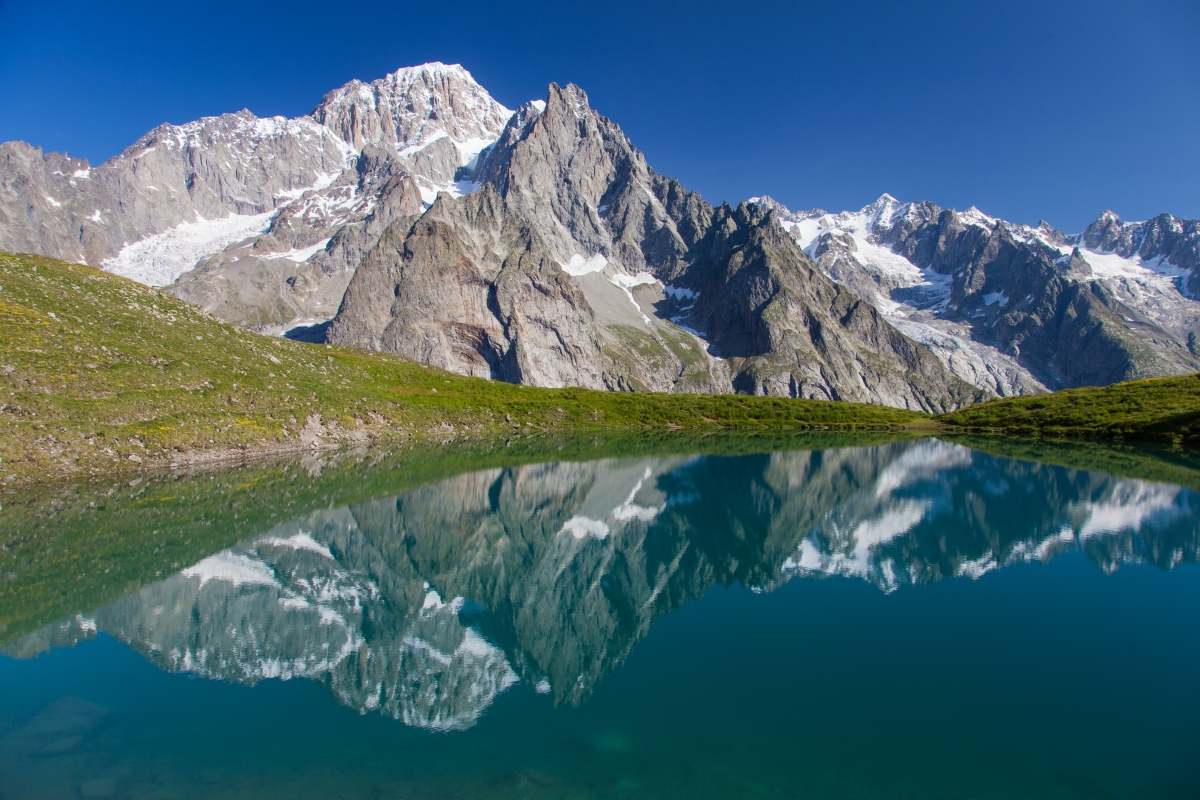
Italy’s smallest region, nestled against the towering spires of the Alps, quietly weaves together medieval fortresses, pristine lakes, and centuries-old traditions. This Aosta Valley travel guide captures the poetic contrasts of a place where French and Italian influences meet beneath snow-covered peaks.
What This Aosta Valley Travel Guide Reveals About Its Medieval Past
Just a short drive from Aosta town lies the Castello di Fénis, a structure whose symmetry and towers appear plucked from a child’s storybook. While its crenellated walls never served defensive warfare, they project prestige and control—symbols of the Challant family’s medieval rule. Inside, frescoed chapels and wooden walkways evoke everyday life from another era. Unlike many preserved sites, this castle feels lived-in, accessible, human in scale. It’s a place that rewards the curious traveler, especially when approached at sunset, when the stones glow amber in the falling light.

Ski Monte Bianco in the Heart of the Italian Alps
Monte Bianco (Mont Blanc), the roof of Western Europe, dominates the northern skyline and anchors the region’s alpine identity. Courmayeur, its stylish resort town, offers both access to top-tier skiing and a front-row seat to mountain drama. The Skyway Monte Bianco cable car, a marvel of engineering, rises to 3,466 meters, opening a panorama that includes glaciers, ridgelines, and silence broken only by wind. Even those who don’t ski will find the journey up transformative—an ascent into light and perspective.

Lago Blu and Cervino: Nature’s Reflected Majesty
East of the village of Breuil-Cervinia lies Lago Blu, a small alpine lake whose name undersells its drama. On calm days, the waters reflect the pyramid of the Monte Cervino (Matterhorn), a sight that’s almost surreal. While most visitors rush to the ski lifts, those who walk just a little find quiet here. The lake is an ideal pause for reflection—both literal and figurative. Surrounded by larch trees and alpine silence, it’s a moment of calm that feels earned.

Aosta Valley Travel Guide to Timeless Festivals
Each January, Aosta transforms during the Fiera di Sant’Orso, a celebration of craftsmanship that dates back over a thousand years. Artisans from across the region line the stone streets, offering wood carvings, lace, wrought iron, and local delicacies. Far from a tourist spectacle, this event is deeply rooted in local pride. Songs echo between stalls, warm drinks combat the chill, and history breathes through every handmade object. For a few days, Aosta Valley’s heritage becomes fully alive.

Though often overshadowed by larger Italian regions, this Aosta Valley travel guide shows how the area rewards those who travel with intention. For another mountainous destination shaped by cliffs and coastlines, explore this Liguria travel guide. Or plan deeper with the official Aosta Valley tourism site and details on Skyway Monte Bianco.